





Author: Archive

Poland, Bulgaria and Croatia now on tourists’ most wanted list as currency sales boom

Tourists are heading east on holiday to a trio of former Eastern bloc countries in search of low prices and new sights to stimulate sore eyes. With currency sales close to double last year’s levels, Poland heads the Post Office® list of Fastest Growing Currencies, with Bulgaria and Croatia in fast pursuit.

Further east still, three long haul destinations – China, Egypt and Dubai – complete the line up of currencies whose growth levels are outstripping those of traditional favourites like Spain and Greece.

Read More
DMA asks USPS to extend rate relief for flats

The Direct Marketing Association is calling on the U.S. Postal Service’s Governors to quickly implement the rate reductions recommended by the Postal Regulatory Commission for Standard Mail flats. The DMA is also asking that the temporary rate relief be extended beyond the Sept. 29 deadline recommended by the PRC.

The PRC’s Second Opinion and Recommended Decision on Reconsideration, which was issued May 25, establishes a transitional temporary rate reduction of 3 cents for all Standard Mail Regular flats and 2 cents for Standard Regular nonprofit flats.

In a letter to the Governors submitted June 4, the DMA asked them to approve the rate reduction without the deadline, leaving it in effect until the next postal rate change, likely in mid-2008, under the new procedures established by the postal reform law, which was signed by President Bush on December 20.

However, the DMA also cautioned that the temporary discounts offered to flat mailers would only postpone substantial cuts in mailing volumes and a further decrease in revenues for the USPS.

Read More

Royal Mail urged to split postal business

Royal Mail, which is rapidly losing contracts for handling mail since the market was opened to competition, should follow BT’s example by splitting its postal operation into two independent businesses, according to a former chief executive.

In an interview with the Financial Times, Bill Cockburn said that while competitors were collecting and sorting an increasing share of business mail, they continued to rely on Royal Mail to deliver more than 98 per cent of it to homes and workplaces across the UK.

“The delivery force has a fantastic reputation and is trusted by its customers,” he said. “Royal Mail has a strategic opportunity to develop this part of the business and use the spare capacity it undoubtedly has.”

Mr Cockburn, who joined the then Post Office in 1961 and rose to become its chief executive in 1992, stood down in 1995 and was managing director of BT’s UK operations between 1997 and 2001. He is now deputy chairman of Business Post, whose UK Mail division handles more than 5 per cent of Britain’s mail.

He said Royal Mail, which faces the threat of strikes over pay and modernisation, had been too defensive since it lost its monopoly. It needed to learn from the privatised utilities how to take advantage of a competitive market.

BT was split into a retail operation, which sold services to customers, and a wholesale business – Openreach – that runs the local networks used by all telephone companies.

“The wholesale side has burgeoned into a huge business that makes a big contribution to profit,” Mr Cockburn said. “It made a lot of sense to open it to competitors.”

But the state-owned operator needed to become more like BT, where the two arms were wholly independent.

Read More

Occupational Safety and Health Administration partnership USPS

U.S. Postal Service employees are experiencing fewer ergonomic injuries as a result of a 2003 partnership between the U.S. Department of Labor’s Occupational Safety and Health Administration (OSHA), the American Postal Workers Union (APWU), the National Postal Mail Handlers Union (NPMHU) and the U.S. Postal Service (USPS).

The organizations have released Examples of Good Ergonomics Practices at the U.S. Postal Service which outlines the achievements of the partnership and the steps taken to help prevent ergonomic-related injuries in the workplace.

The document illustrates several examples that could have resulted in an ergonomic-related injury and the proactive measures taken to correct the situation before a workplace injury occurred. Several of the protective measures cost less than USD 100 to implement.

Once the Ergonomic Risk Reduction Process (ERRP) is initiated, an ergonomist uses the 10-step process to identify jobs with high rates of MSDs. Those jobs are then broken down into tasks and steps. The ergonomic risk is then linked to the steps before identifying an implementation plan, obtaining feedback, and determining the cost to implement the solution.

Read More

DHL opens new Asian centres with TAPA certification

DHL Express in Asia Pacific has won more TAPA certifications and opened more service points in the region.

The carrier has been awarded the Technology Asset Protection Association certificate for its facilities in New Zealand at Auckland airport and the Wellington Service Centre.

DHL Express now has five TAPA-certified facilities in Australia and New Zealand and over 100 in the Asia Pacific region as a whole.

The company also opened its 11th Philippines service point – at Harrison Plaza in Manila – and a new courier depot in Danang, central Vietnam, part of a $14 million investment in the country.

The Transported Asset Protection Association (TAPA) is an organization made up of security professionals representing high technology companies and related service providers.

Read More

Posts and electronic services go hand-in-hand

Some 150 people attended a conference on the postal sector and the information society, organized on Friday 8 June at UPU headquarters in Berne.

E-Commerce development, Internet security, identity authentication, delivery of merchandise bought online, protection of personal data, and partnerships to be explored were among the many topics discussed during the conference organized by the UPU in cooperation with the International Telecom-munications Union. The discussions brought to light many opportunities and issues facing companies that have gone the e-business route and for which the postal sector, with the help of the UPU, could bring solutions through more standardization as well as improvements to quality of service and security.

In their presentations, the Canadian, Tunisian, Italian and Korean Posts showed how they used new technologies to develop innovative services that responded to customers’ needs. For example, the Korean Post has developed systems such as PostNet to better manage its mail operations and ePost to facilitate Internet access through post offices. With the creation of its electronic bank, today close to 67% of all postal financial transactions are electronic. The Korean Post now wants to become ubiquitous thanks to its u-Post project, which relies on radio-frequency identification technology.

eBay International explained how the company maintains a very close relationship with postal services for the delivery of merchandise bought on eBay sites, while Ernst & Young talked about the evolution of cyberspace security and improvements made to better protect electronic data.

Read More

Trans-o-flex reinforces European network in Slovakia

Trans-o-flex, the express delivery specialist and leading combi-freight player in Europe, is further reinforcing its European network EURODIS: the Slovakian company In Time s.r.o. became a EURODIS partner at the beginning of this month, picking up and delivering packages and pallets for trans-o-flex in Slovakia.
In Time Logistics, founded in 1990 and headquartered in the Slovakian capital Bratislava, delivered about 3,400,000 shipments in 2006. EURODIS, a partner network created by trans-o-flex, has existed since 1993 and assures industry-tailored logistics services with uniform quality standards in 21 European countries
Trans-o-flex, based in Weinheim, South-West Germany, is a logistics group active throughout Europe. In Germany, via its express delivery service, it offers a full-coverage network for efficient and safe transport of parcels and pallets (“combi-freight”). Apart from its nationwide 24-hour deliveries with numerous Express and added-value options such as hazardous material transport, trans-o-flex has developed the EURODIS network which provides delivery services in European countries, making trans-o-flex one of the leading combi-freight service providers in Europe.

Read More

Overtime strike hits Railway Mail Service delivery

Overtime strike by around 500 group C and D employees of Railway Mail Service (RMS) in the ‘F’ division of Nagpur has badly affected the delivery of mail.

The employees, affiliated to National Federation Postal Employees (NFPE), are up in arms against the management for going back on its assurances to fulfill the genuine demands. The federation leaders said that they had submitted a charter of 15 demands to the divisional head in a meeting held on May 22.

The strike has been simultaneously launched at Nagpur, Malkapur, Gondia, Chandrapur, Yavatmal, Wardha, Akola and Amravati.

Read More

Advertisement

Advertisement

Advertisement

P&P Poll

Loading

Have you noticed a decrease of non-EU inbound parcel volumes since the implementation of the new €3 charge?

Thank you for voting
You have already voted on this poll!
Please select an option!


Post & Parcel Magazine


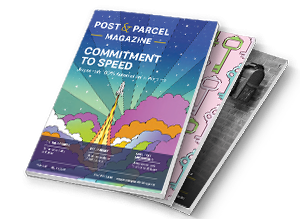
Post & Parcel Magazine is our print publication, released 3 times a year. Packed with original content and thought-provoking features, Post & Parcel Magazine is a must-read for those who want the inside track on the industry.


Pin It on Pinterest