





Tag: direct mail

Australia Post launches rub-and-sniff mail

Australia Post is urging businesses to get up the noses of their customers with rub-and-sniff mail.

“The list of aromas available is extensive with everything from fruits, ice cream and freshly cut grass to wine, pizza and coffee,” said Australia Post product manager, Melanie Kenter.

“Scent-infused ink is printed straight onto a mail pieced as part of the print production process. Once printed, the aroma is released with a simple rub of a finger across the surface.”

The scented mail has been launched in tandem with the Impact Mail service, which allows businesses to send items of almost any shape without the need for an envelope.

“Scented mail and Impact Mail demonstrate the unique nature of direct mail. It is a very personal medium that appeals to all senses. You can hold and unfold it, read and see it, hear it and now even smell it,” said Kenter.

Read More
Why Big Newspapers Applaud Some Declines in Circulation

Big American newspapers sell about 10 percent fewer copies today than they did in 2000.
The big American newspapers sell about 10 percent fewer copies than they did in 2000, and while the migration of readers to the Web is usually blamed for that decline, much of it has been intentional. Driven by marketing and delivery costs and pressure from advertisers, many papers have decided certain readers are not worth the expense involved in finding, serving and keeping them.

That rational business decision is being driven in part by advertisers, who have changed their own attitudes toward circulation.

In the boom years, “there was more willingness by advertisers to assign some value to the occasional reader, the student, the reader who doesn’t match a certain profile,” said Jason E. Klein, chief executive of the Newspaper National Network, a marketing alliance.

But advertisers have become more cost-conscious and have learned how to reach narrowly tailored audiences on the Internet. Sponsors of preprinted ads that are inserted into a newspaper have been especially aggressive in telling papers that some circulation just is not worthwhile.

As a result, newspapers have sharply curtailed their traditional methods of winning customers — advertising, cold-calling people and offering promotional discounts. That strategy was always expensive, and it has become more so with do-not-call laws and the rising number of people who have only cellphones. According to the Newspaper Association of America, the average cost of getting a new subscription order, including discounts, was USD 68 in 2006, more than twice as much as in 2002.

Read More

Daily newspapers increase spending with U.S. postal service

The nation’s daily newspapers are spending nearly USD 1 billion on postage for services from the U.S. Postal Service, according to a national survey by the Newspaper Association of America. According to the survey, newspapers spent more than USD 972 million in 2006 compared with USD 901 million in 2004 and USD 700 million in 2002.

“Collectively, daily newspapers are a leading customer of the U.S. Postal Service and many of our member newspapers are the largest mailers in their local markets,” said John F. Sturm, president and CEO of the Newspaper Association of America. The national survey also found that 47 percent of the Standard Mail products mailed by daily newspapers— principally newspapers’ Total Market Coverage product — are entered at local post offices called Destination Delivery Units.

These products are equally distributed through both high-density and saturation rates. The findings reinforce the importance of local entry and the partnership newspapers have with local postal delivery units to ensure that advertising products are delivered in a timely and efficient manner to meet the needs of a newspaper’s advertising customers.”

Read More

Canada Postal code: Deliver advertising, or else

Canadians can expect a lot more unwanted advertising in their mailboxes as Canada Post cracks down on letter carriers who have been plucking out marketing mailings with outdated names.

Carriers have, on their own, been quietly defying Canada Post policy that specified that all advertising mail is to be delivered to customers, even if it is addressed to a previous occupant – and even if the recipient says they don’t want it.

No more: Over the summer, letter carriers started operating under the letter of that postal law, meaning each and every piece of mail must be delivered. Carriers are grumbling, and saying customers are incredulous they must intercept their mail – every day – in order to have such incorrectly aimed advertising mailers returned.

But Canada Post says it won’t endanger its half-billion in revenue from mass mailers, and that it is obliged to deliver the advertising pitches that generate the cash, 1.47 billion pieces of individually addressed ad mail last year. “You pay to have mail sent to somebody, you don’t pay to receive it,” spokesman John Caines said.

Canadians can arrange to refuse delivery of junk mail – Canada Post calls that unaddressed ad mail – and they can request to have their own names stricken from direct-mailing lists. But their only recourse in the case of advertising that has their address but someone else’s name is to continue to send the mail back in the hopes the sender eventually gets the message, or to contact each company directly.

It’s not clear just how much mail was being diverted by letter carriers, but a Canada Post study found that 7 per cent of the total mailings weren’t being delivered within a three-day window.

Read More

Saudi Arabia's first direct mail conference kicks off in Riyadh

Under the patronage of his Excellency Dr. Mohammed Benten, the first conference in the Kingdom to focus solely on direct mail, titled ‘Saudi Arabia’s First Direct Mail Forum’, was inaugurated.

Saudi Post (SP), Saudi Research and Marketing Group (SRMG) and Direct Marketing Services (DMS) joined forces to organize this momentous event to celebrate the beginning of a new and innovative industry in the Kingdom; Direct Mail and to officially announce the close cooperation and strategic partnership of the Saudi Post, SRMG, and DMS working towards enhancing the Direct Mail Industry in Saudi Arabia and forming an entity specialized in DM.

Al Faysaliah Hotel in Riyadh hosted over 250 participants who included business executives, high profile business leaders, company presidents and managers in different fields including retail, airline, banking and insurance entrepreneurs and media representatives attended the conference to listen to international and local speakers.

Direct mail experts from the United Kingdom, Belgium, Poland and Saudi Arabia shared their experience and knowledge on direct mail with the audience. A series of presentations took place throughout the day, topics included, ‘Direct Mail, a Strategic Tool of Direct Marketing’, ‘How DM increase Brand Perception, Sales Activation and Loyalty Building’, ‘What to Test in DM’, ‘How to Run a DM Campaign’ and much more.

Read More

Advertisement

Advertisement

Advertisement

P&P Poll

Loading

Have you noticed a decrease of non-EU inbound parcel volumes since the implementation of the new €3 charge?

Thank you for voting
You have already voted on this poll!
Please select an option!


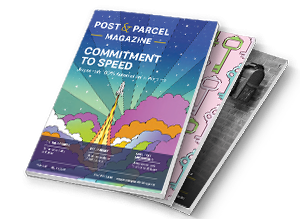
Post & Parcel Magazine


Post & Parcel Magazine is our print publication, released 3 times a year. Packed with original content and thought-provoking features, Post & Parcel Magazine is a must-read for those who want the inside track on the industry.


Pin It on Pinterest