



Tag: Domestic

DHL plans new parcel products in Germany

DHL is responding to customer wishes in Germany by testing new parcel services and plans to simplify its portfolio by re-branding products from next January, a senior manager said.

One innovative new service was parcel deliveries in the evening, Uwe Brinks, managing director DHL Parcel Germany, told last week’s KEP Kongress in Bergisch Gladbach, near Cologne. The parcels company, with revenue of EUR 2.6 billion in 2007, is the German parcel market leader.

Research among 1,500 existing and potential B2B and B2C customers had shown that top priorities included high reliability, low damage, understandable products and good customer service based on “convenience”, Brinks said.

At the same time, competition was intensifying as more parcels operators broadened their portfolios towards a “universal” range of B2B, B2C and C2X products, he pointed out. All parcel operators were also affected by rising costs, he added.

In response to the changing environment, DHL Parcel Germany had adopted the slogan of “ Simple, Always, Everywhere”. In January 2009, it would simplify its complex product branding to “ DHL Paket” for deliveries within Germany, with various add-on options, and to “DHL Europaket/Weltpaket” for international parcels, Brinks said.

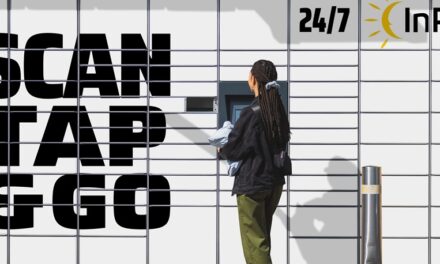
Availability was being enhanced with services such as 24/7 self-service parcel drop-off and collection points (Packstations, Paketbox), and parcel tracking by mobile phone.

The KEP Kongress, the 14th annual conference event for the postal, parcels and express sector, was organized by Hamburg-based Deutscher Verkehrs-Verlag.

Read More

First class war for Business Post's Guy Buswell

Tucked away in one of Guy Buswell’s depots are 12 pillar boxes. Standard Royal Mail design but painted blue. For Buswell is a private postman and the pillar boxes may one day be part of his expansion plans. For the moment, however, they confirm the conclusion of last week’s report from former Ofcom regulator Richard Hooper that the private consumer has seen no benefit from introducing competition to postal services.

Buswell is chief executive of Business Post, which collects letters from the likes of Vodafone and HSBC, sorts them and hands them to the Royal Mail for delivery. His UK Mail subsidiary handles more than 10 per cent of Britain’s post but, as yet, the public cannot give him letters for posting.

On the wall of his office, on an industrial estate outside Birmingham, above one of his 57 depots, is the very first envelope he delivered. It was from Powergen, posted on May 10 2004, and commemorates the end of the 370-year postal monopoly.

UK Mail now delivers more than 2bn letters a year. “Last week we carried 12m items in one day,” boasts Buswell, 46. It is arguably Britain’s biggest private mail service (the argument would come from TNT, the Dutch post office) and this week he will announce plans to change the quoted Business Post name to UK Mail Group.

Just 50 big customers account for 40 per cent of Britain’s post and Buswell has signed up a fair share, including Abbey, Prudential, Carphone Warehouse, Lloyds TSB and Royal Bank of Scotland. Yet sending letters is a shrinking business.

He blames Royal Mail, whose universal service last week posted its first loss in the year to March – a GBP 100m shortfall.

“We can collect mail from any customer that has 200 items per night. In the future there will be pillar boxes – or collection points,” he says. For now, however, he is working on I-mail, which will allow anyone to e-mail a letter to UK Mail for hand delivery next day.

Why not e-mail it directly to the recipient? Buswell points out that legal addresses are not electronic addresses. I-mail will be launched this summer and the consummate salesman explains: “It massively reduces the carbon footprint and reduces time. It will cost between 40p and 50p and be a next-day service.”

But its importance, he states, “is that it will be innovation in the mail industry by a competitor.”

Read More

USPS releases final address standards for commercial flat-sized mail

The USPS has published its final rule for new address standards for commercial flat-sized mail in the Federal Register.

The new standards, published May 7 and set to go into effect March 29, 2009, will require mailers to adopt new address placement and formatting requirements for periodicals, Standard Mail, bound printed matter, Media Mail and library mail flat-sized pieces sent at automation, presorted or carrier route prices, the USPS said. The standards also include similar revisions for automation and pre-sorted First-Class Mail flats.

According to the new standards, mailers will need to place delivery addresses within the top half of their mailpieces. Mailers will also need to address presorted, carrier route and automation flat-sized mail pieces using a minimum of eight-point type. Or, if the piece has a Postnet or Intelligent Mail barcode on it, a minimum of six-point type in all capital letters will be required.

In the notice, the USPS said it will publish a quick service guide and other additional materials to help mailers prepare for the change.

The new address standards will assist the USPS in its implementation of its new Flats Sequencing System (FSS), which will sort flat-sized mail into delivery sequence, thereby reducing carriers’ time spent manually sorting mail.

Read More

Deals with mass-mailers, labor unions hurt customers

On Monday [May 12], the price of a first-class stamp will rise by a penny. With gas now costing nearly four bucks a gallon, a 42-cent stamp may not sound like much. But while stamp prices climb, the Postal Service keeps offering sweetheart deals to bulk mailers and the postal labor unions.

Ordinary consumers ought to ask why the Postal Service is delivering for everyone but them.

In the last decade, stamp prices have gone up 31 percent. Following sweeping congressional reforms in 2006, the Postal Service hinted at annual rate increases. With Monday’s increase — the second in as many years — the Postal Service seems to have settled on raising prices each year in mid-May.

At the same time, the Postal Service has taken to offering discounts to big mailers based on how much mail they send. When done right, such agreements can save both the Postal Service and the mailer money. But in several previous agreements, the Postal Service has either granted a discount for mail that would have been sent anyway or granted discounts deemed excessive by regulators.

In 2006, the Postal Service’s regulator issued a decision on an agreement with Bank One. The report wondered whether discounts were necessary in light of expert analysis revealing “tremendous growth in the amount of direct mail solicitation undertaken by the credit card industry.”

Read More

Advertisement

Advertisement

Advertisement

P&P Poll

Loading

What's the future of the postal USO?

Thank you for voting
You have already voted on this poll!
Please select an option!


Post & Parcel Magazine


Post & Parcel Magazine is our print publication, released 3 times a year. Packed with original content and thought-provoking features, Post & Parcel Magazine is a must-read for those who want the inside track on the industry.


Pin It on Pinterest