

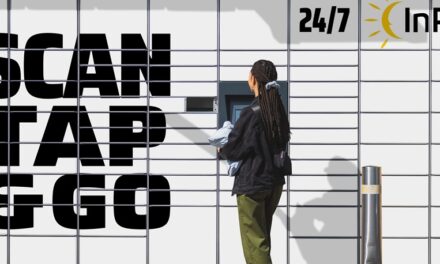



6th International Petersberg Conference. Future of the Postal Outlets
6th International Petersberg Conference. Future of the Postal Outlets
Read More6th International Petersberg Conference. Future of the Postal Outlets
Read MoreMarketers are dramatically failing to target expectant mums at the right time of the pregnancy and birth cycle according to independent research specialist Mum’s Views.
The research entitled “What Mums Really Want” was commissioned by Lifecycle Marketing, publishers of Emma’s Diary the UK’s leading pregnancy guide.
Currently 84 per cent of new mums receive the market-dominant sample packs of baby products whilst in hospital with most given out after giving birth but the research confirms that this is not the most effective channel or time to be influencing new mums’ purchasing decisions.
The research which polled over 2,600 new mums and pregnant women, shows that 99 per cent of new mums start to buy products for their baby before giving birth, with the majority (71 pct) starting to buy before the end of the second trimester of pregnancy (26 weeks).
The research also found that, generally speaking, mums are loyal to the brands that they use, with 79 per cent of mums claiming loyalty to the brands that they buy.
Of the new mums that were polled, over 90 per cent said they had bought most of the items they needed for baby by the time they went into hospital and the following percentage of respondents had bought these everyday mother and baby items before the
Emma’s Diary, created by Lifecycle Marketing, is the leading guide to pregnancy in the UK (ABC) and is published on behalf of the Royal College of General Practitioners. It has been distributed by GPs and Midwives throughout the UK for the last 15 years and is given to Mums-to-be on confirmation of their pregnancy.
The third annual NCR Self-Service Consumer survey reveals that 86 percent of US and Canadian consumers say they are more likely to do business with a company that offers the flexibility to interact using self-service – whether via the Internet, on a mobile device or at a kiosk or ATM. That’s an increase of 11 percent over those who gave the same response in last year’s study. Moreover, 56 percent say their likelihood to use self-service has increased over the past year.
In addition to being more likely to do business with enterprises offering self-service, 66 percent of the survey respondents say the availability of self-service technologies creates a more positive perception of the deployer’s brand.
“These factors – ‘likelihood to do business’ and ‘brand perception’ – together have important implications for customer loyalty, which certainly deserves to be a key criteria for any organization’s self-service strategy,” Nuti added.
The survey also shows that consumers clearly value the ability to use a combination of self-service channels – their PDA or mobile phone, the Internet and touch points such as ATMs or kiosks – to improve their overall experience. For retail transactions, 97 percent surveyed would use a combination of such self-service channels to handle a transaction or service. The findings are similar for the travel and hotel sector (94 percent).
Speed, convenience and ease of use are identified most frequently by respondents when asked why they would choose self-service over personal assistance in each of four industry sectors:
— retail (faster-68 percent, more convenient-64 percent, easier-52 percent);
— travel (faster-63 percent, more convenient-61 percent, easier-60 percent);
Among other factors consumers cite as reasons for choosing self-service are heightened privacy and greater control.
Read MoreA thought leadership paper on strategies and tactics for managing e-retailing in an economic slowdown
Thinking about Recession retailing. This paper examines strategies and tactics for e-retail management before, during and after an economic downturn.
Home delivery needs major improvement that can only be achieved through collective effort by all stakeholders: CONSUMERS, RETAILERS and CARRIERS. This report sets out the cost-benefit of home delivery to these three key stakeholder groups.
CONTENTS (33 pages -May 2006)
1. Introduction
2. Executive Summary
3. How Can Home Shopping Delivery Be Improved?
4. The IDIS Trust Scheme – http://www.imrg.org/IDIS
5. Background & Research
6. Definitions
7. Consumer Costs of e-Retail Delivery Failure
8. Merchant Costs of e-Retail Delivery Failure
9. Carrier Costs of e-Retail Delivery Failure
10. Merchant Cost Benefit Model (in development)
Appendix A: Summary of IMRG Merchant Survey Data (2005)
Appendix B: IMRG Merchant Survey
Appendix C: Summary of cost values and assumptions
Appendix D: Supporting Research
Appendix E: Snow Valley report for IMRG: e-Retail Delivery in the UK (extract of findings)

Post & Parcel Magazine is our print publication, released 3 times a year. Packed with original content and thought-provoking features, Post & Parcel Magazine is a must-read for those who want the inside track on the industry.