




Transforming the postal service with proven AI

Dave Woodward – Systems Solutions Programmes Manager, Lockheed Martin UK, speaks about innovation, integration, and proven performance in advancing automation across the postal and parcel industry.
“For any business owner, making large scale changes to existing sorting operations can seem risky. Running a business around the clock to tight deadlines leaves no room for downtime, and disruption can mean more than disappointed customers and additional costs; it can lead to the loss of major clients who won’t accept the impact on their business.
It’s this perceived risk that leaves businesses struggling with mail recognition tech that doesn’t deliver. Solutions based on Machine Learning or AI are, in reality, ongoing experiments; demonstrations given limited subsets of problems in order to generate interest or investment.
Few are being used in earnest in real world operations at an industrial scale.
Introducing the Minerva solution suite
By working alongside its global customers, Lockheed Martin has developed a product with real world impact – Minerva – a proven mail recognition solution that is ready to integrate today.
Lockheed Martin has had a significant presence in the Postal and Logistics industry for more than four decades. Its logistics business, based in Havant in Hampshire, is focussed on delivering high tech, proven solutions that integrate seamlessly into an organisation’s existing set-up.
Minerva: proven performance
Minerva is an automated sorting software, designed to improve efficiency and recognition for companies handling large mail volumes. Developed in the UK, the Minerva product suite features a series of software modules that use deep learning/AI technologies.
It works by automatically processing images of postal items, identifying the Regions of Interest (ROI) before processing their data elements. This has the potential to increase sortation speed, reduce expensive manual sortation, and bypass the need for additional video coding.
Customers using Minerva find they can make longer-term planning decisions thanks to the reduced need for manual data entry at peak periods.
Advanced image processing
Improved Address Matching on Cross Border Packets
Minerva uses an advanced suite of algorithms which can locate defined areas of information in even the most cluttered of postal labels.
The Minerva Enrichment Device (MED) is taught to identify important information on any label design, before accurately and automatically locating the Delivery Address Block. This deep learning approach does not require templating or feature mapping, making it highly flexible and resilient to small changes in label design.
Depending on the application, Minerva can pass coordinates of the required area along with an image segment to the address recognition solution, reducing or even bypassing the need for extra video coding, speeding up sortation and reducing manual intervention.
MED: delivering results
The Minerva Enrichment Device (MED) has been successfully implemented in automated sortation operations in PostNord, Sweden, and in the UK, where it demonstrated a significant increase in read rates and a reduction in video coding (VCS) tasks.
MED takes an image from the existing system and determines the correct Region of Interest (ROI) – normally the destination address – even within a noisy, complex image that might include advertising, return address, multiple barcodes and other labels. MED then presents this ROI to the customer’s existing address matching service to make a successful match. The process is extremely fast and, depending on operation constraints, can be used to pre-process all images, or only problem mail pieces.
MED can be integrated into existing sortation operations at any appropriate point, allowing customers to improve the performance of areas that provide most benefit. It can reduce the need for investment in new systems by removing existing OCR constraints, while delivering a significant increase in throughput and a reduction in operational costs.
Minerva eCommerce (MEC)
With a large and growing volume of cross-border traffic, postal operators must capture declared contents and value and recover VAT if required. The automated real-time capture of label information is essential.
MEC can identify a label’s customs information with a high degree of accuracy. It then passes this to the OCR solution to read, capture on a database, or send to video coders to check. Rules can be set to identify items that don’t fit the expected pattern (for example, a high weight and large size, but low declared value) which can then be diverted for inspection.
Currently, PostNord Sweden uses MEC to identify relevant information for video keyers, thus speeding up their tasks.
Minerva Auto Keyer (MAK)
However much automation exists within an enterprise, many will still rely on human interaction to deal with ‘edge cases’ that the usual automation simply cannot manage. Address matching, for example, is often carried out using video coding or manual data entry suites, where human operators view and sort mail.
Minerva’s MAK can complete these simple video coding tasks at speed. It appears to the existing system to be a human operator, albeit an incredibly fast one. As task requirements or mail volumes change, MAK can be quickly retrained to recognise new patterns, maintaining performance and value.
In the real world, deploying a small suite of Auto Keyer instances allows customers to dispense with manual data entry suites entirely. As MAK delivers a cost effective and reliable solution, the need to hire seasonal workers for busy periods is removed.
Minerva Image Processor (MIP)
Minerva Image Processor (MIP) quickly transforms images within a computer vision processing pipeline. It can read addresses on letters and parcels or replace traditional image binarisation algorithms which can’t always adapt to printing, packaging or image capture conditions.
When given an address block by the Minerva Enrichment Device, MIP can transform it into a high contrast image – similar to a clean item of mail – ready for reading and assignment. The result is higher address recognition rates and fewer errors in address assignment.
Processing in practise
MIP can be installed on hardware for either GPU or CPU, depending on the operational requirements of the customer. Its machine learning network can be trained to obtain the best performance on a given image set.
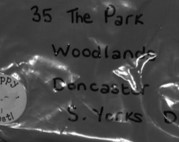


Advancing smart mail recognition and transforming the postal industry
The suite of Minerva solutions can be integrated into existing enterprises and operations at very low risk. Better still, in most cases licencing can be provided on a short-term basis, so new customers can see the value Minerva delivers before making a long-term investment.
Thanks to advanced technology, tried and tested in the field, Lockheed Martin is advancing mail recognition and delivering significant cost and efficiency savings to some of Europe’s biggest mailing organisations.”
To find out more, contact: [email protected]
About the author
 Dave Woodward is a seasoned IT and programme management leader with over 30 years of experience spanning defence, logistics, and infrastructure sectors. Currently serving as Systems Solutions Programmes Manager at Lockheed Martin UK, Dave heads the Systems Solutions portfolio, delivering advanced image analysis and data services technologies to national logistics operators and beyond.
Throughout his 15+ years at Lockheed Martin, Dave has held multiple leadership roles, including Programme Manager and Capture Manager, where he spearheaded software solutions for the international postal sector and drove customer-focused growth through agile programme delivery. His earlier career includes senior project management roles at Fujitsu and IBM, where he led complex, multi-disciplinary infrastructure programmes for high-profile clients such as the FCA.
With a BSc in Computer Science from Edinburgh University and Associate Certified Coach credential from the International Coaching Federation, Dave blends technical expertise with strategic vision and inclusive leadership.