



Author: Archive

Bringing postal services into 21st century

Personalised stamps arrying your photograph or even the logo of an organisation and wiring money from Cyprus to other countries, are some of the new services that will be added by Department of Postal Services of the Ministry of Communications.

The Director of the Postal Services, Andreas Gregoriou announced that these services will be available to the public before the end of 2008.

In the past, the Cyprus postal service has been notoriously unreliable, attracting several warnings and fines from the EU over its efficiency, profitability and running. In line with EU law, plans are already under way for its deregulation.

Presenting the organisation’s new customer charter, Communications Minister Nicos Nicolaides said Cypriot post offices have published the charter so that citizens are aware of the services that are offered, and the rights that they have as users of these services.

Gregoriou also announced that a new privately-owned building will be built where the present central post office stands (in Strovolos’ Prodromou Street) and new offices of the postal services will be established there.

The charter includes a short description of the services offered. Forty thousand copies have been published and they are available to pick up at all post offices.

In Cyprus, the post offices offer their services through an organised network that is comprised by fifty-two post offices and 1,100 postal agencies.

Read More
TNT dismisses FedEX buy-out rumour

Rumour that FedEX Corp could buy out Dutch-owned TNT, reported in the Financial Times, has been dismissed as speculation by TNT.

Although the idea isn’t a new one, the potential for a complete or partial buyout could be greater than ever as TNT, like many postal operators across Europe, feels the pinch of higher operating costs coupled with economic slow-down. It could be an attractive proposition for FedEX as the acquisition would strengthen FedEX’s presence in Europe.

For FedEX too, these are also difficult times, with the U.S. in the midst of a recession, but merging the two companies would enable both to ride out the present economic decline and put added pressure on Germany’s Deutsche Post. FedEX has already announced its first quarterly loss in over a decade.

If there is any basis to the rumour, it could increase FedEx’s European parcel-delivery sales by as much as 144 percent and cause other European operators to look again at further mergers.

However, TNT posted a message on its website which read:

“With reference to various news articles today in which TNT was mentioned, TNT wishes to reiterate its policy not to comment on such speculation and market rumours.”

Read More

Postal Service's EMS team captures gold

The Cayman Islands Postal Service’s (CIPS) Express Mail Service (EMS) team continues to perform at the highest level, capturing a Gold Level Certificate in the process.

The team, comprising Hoyt Ramoon, Joshua Rivers, Debbie-Ann Christie, Ammarica Jordon and Jared Ebanks, was awarded a gold level achievement in 2005 and 2006 and reached the top 20 in 2007.

According to IBM, the Cayman Islands on-time delivery measurement is 98 percent. The Gold Level certificate recognizes the team effort, from front counter to all those who handle the mail. However, it is the EMS group’s dedication that makes the difference in quality of delivery.

EMS is an international postal express service for both documents and merchandise, which aims to globally provide a high quality, competitive express mail product at an affordable price. In most countries, EMS is the only practical means of providing private customers with universal access to international express services.

The CIPS introduced the service in the 1980s. Initially available only to the United Kingdom, several years later the programme expanded worldwide. Today, EMS reaches over 140 countries and is managed by the EMS Cooperative.

The Express Mail Service is available at all 15 post offices on the three islands.

Read More

FedEx to open Asia-Pacific Hub in Guangzhou

FedEx Corporation says its Asia-Pacific transport center is to complete construction in the Guangzhou Baiyun Airport at the end of July 2008, citing a report.

Covering a land area of about 1.634 million square meters east aside of the airports eastern runway, the hub is FedEx’s biggest one in Asia-Pacific, composed of a service zone and a flight zone. And the service zone has passed regulatory review to start business on July 9.

It is equipped with an emergency electricity generating system, capable of resuming power supply eight to 14 seconds after power cut. Its distribution center is designed with first-class lightning protection, and is able to resist eight to whole gale as well as strong earthquake.

The transport base is expected to have a daily throughput of 1,823 tons, including 179,000 express parcels. And local officials hope that it would lure more investors into Guangdong Province.

Read More

TNT adjusting to realities of on-line B2C deliveries

TNT’s operation research systems are concentrated on five hubs in India- Nagpur, Kolkata, Mahipalpur (near Delhi), Neelmangala (near Bangalore) and Sinnar (near Nashik).

Though it has ten depots in the USA for trans-Atlantic consignments, TNT has stuck to a policy of not competing with established players like UPS and FedEx in the American market. Instead, it in concentrating on growth in the emerging markets. “In select emerging markets, we aim to be number one,” says TNT’s group managing director Marie-Christine Lombard.

The Dutch company has been expanding its operations in emerging markets through a strategy of mergers and acquisitions. In Brazil, it has acquired Mercurio, in Kenya, it has bought Aircare and in China, it has taken a 100 pct stake in Hoau, the country’s largest road transport company. In India, TNT bought over the Hyderabad based Speedage Express Cargo two years ago, thereby acquiring 514 depots, 26 transit hubs and 730 vehicles.

“In countries the size of India and China, starting a greenfield operation is very difficult,” says Lombard. “At the same time, there was no overlap between the operations of TNT and acquired companies like Speedage and Hoau. We provided international connectivity to their domestic operations.”

Lombard also sees new opportunities for the company in Europe’s booming e-markets, where logistics is intrinsic. The UK and Germany logged 22 billion euros worth of on-line sales each last year, with books, movies, clothing being the main products. The French have been slower to get on-line , but they’re gradually catching up.

Traditionally a B2B player, TNT is adjusting to the realities of on-line B2C deliveries.

Read More

UPU Geneva Conference Proposals: Potential Implications for U.S. Consumers and Markets

According to one 2008 UPU publication, 69 percent of the world’s permanent or mobile post offices offer financial services. Funding initiatives that would provide advantages for state postal monopolies to enter sectors already served by the private sector, such as financial services, would not benefit U.S. consumers and markets. They also place monopoly consumers at increased peril of being overcharged to finance such new ventures.
As discussed in the U.S. Strategic Plan for the UPU presented at this Committee’s meeting in March, it is a primary goal that the UPU “promote and encourage unrestricted and undistorted competition in the provision of international postal … and delivery services.”
Several proposals and documents discuss an expanded involvement for the UPU into the financial services sector, an expansion the United States should view with considerable concern. These include:

• The Postal Operations Council Report, Document 23, puts forward a definition of the postal sector including a financial dimension, specifically discussing credit cards, savings products and pension payments.

• UPU Proposal 10, “Postal Financial Services Development” instructs the Postal Operations Council and the International Bureau to “meet the demands of the changing environment” by, among other things, “promoting anti-money-laundering activities” and “recommending the introduction of new financial services which could be offered via the worldwide postal network.” According to the U.S. Strategic Plan for the UPU, it should be ensured that policies comply with U.S. anti-money laundering policies and other regulatory requirements.

• Document 27A, Council of Administration Report, discusses the “Connect the World” initiative proposed to be completed by 2015. As described, the initiative would develop postal financial services, and in particular money transfers, through partnerships between governments, the private sector and international organizations.
Other Sectors
The Postal Operations Council report discusses other areas, such as parcels, express and logistics services, each with an articulated future role for the UPU, particularly in developing markets and business development.
For instance, it cites logistics, and specifically the “strong growth area” of outsourced warehouse-to-customer logistics functions. In 28 percent of UPU member countries, national posts currently offer logistics services, according to the UPU. “Issues of corporate freedom and competencies to develop these services [by national posts] will be limiting factors, unless they are suitably addressed,” the report states.
Proposal 28 concerns climate change and sustainable development and includes the producing publications for postal administrations on the subject and, “developing Socially Responsible Investing products, microcredits for postal administrations that carry out banking activities, and reliable, affordable fund transfer services for migrant workers and their families.” It then outlines a future role for the UPU as an active contributor to market development, undertaking robust market analysis while working with all stakeholder groups.
Proposal 37 from the Postal Operations Council seeks to advance postal market development goals. It would specifically instruct the council to “facilitate the growth of letter post, parcels and postal financial services markets, as well as business services, logistics and E-business, including hybrid mail, E-shopping, electronic postal certification and dot.post.” It also instructs the council to increase capabilities and create or maintain business relationships and partnerships to facilitate such growth.”

Read More

Advertisement

Advertisement

Advertisement

P&P Poll

Loading

How ready do you feel for the de minimis changes coming in July?

Thank you for voting
You have already voted on this poll!
Please select an option!


Post & Parcel Magazine


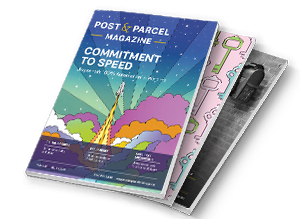
Post & Parcel Magazine is our print publication, released 3 times a year. Packed with original content and thought-provoking features, Post & Parcel Magazine is a must-read for those who want the inside track on the industry.


Pin It on Pinterest