



Tag: Royal Mail

One letter in four comes via Royal Mail rival (UK)

Rivals to Royal Mail now handle one in every four letters and are poised to increase volumes further, The Times has learnt.
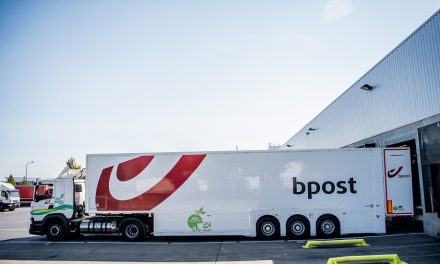
It is understood that Royal Mail now carries out the full process of collection, sorting and deliver of three out of every four letters posted, as against four out of five last year. This follows an exodus of blue-chip bulk mailing customers to rival operators such as TNT and Business Post.
More customers may have been pushed to quit Royal Mail after last year’s industrial action despite competitors still having to use Royal Mail’s infrastructure and postal staff for the “final mile” delivery.
Royal Mail’s business could shrink further if rivals continue to grow. TNT, one of its two main competitors, expects to handle 2.4billion items of mail this year. Business Post, which does not make specific forecasts, said it expected to exceed that amount. Last year TNT handled 1.8billion items out of a total annual postbag of 20billion and Business Post
TNT’s prediction of a 33 per cent increase in mail volumes comes as the company is building up local business as well as targeting large national customers such as utilities and banks. Nick Wells, Managing Director of TNT’s UK mail business, said the business was putting resources into five regional centres.
Royal Mail is paid by rivals for the “last mile” delivery. It claims it is paid too little although its competitors say that its prices are too high.
The loss of business to rivals comes as a review commissioned by the Government looks into the future of the state-owned group. There are growing worries from Royal Mail, Postcomm, the industry regulator, and the main postal union, that Royal Mail is facing dire financial problems.
The Hooper review into Royal Mail is scheduled to set out recommendations to the Government. The regulator has said that Royal Mail needs an injection of private equity. But even if stakeholders backed such a move, it is not clear what interest there would be from private equity because of Royal Mail’s huge pension deficit. It currently stands at GBP 3.4billion but could double after an actuarial review.

Read More

Ex Royal Mail marketer Batchelor set for TomTom position (UK)

Former Royal Mail Marketing Director Alex Batchelor is to resurface at sat-nav brand TomTom later this year as Chief Marketing Officer.

Batchelor’s departure from Royal Mail in June followed a board-level restructure that led to Group Strategy Director Alex Smith taking on overall marketing responsibility as Strategy and Commercial Director. Batchelor is to take up the role at TomTom in September.

Prior to leaving Royal Mail, Batchelor is understood to have been a keen advocate of a partnership deal with London 2012, a tie that could yet materialise. One of his final decisions was to retain Abbott Mead Vickers BBDO and Proximity London on its ad and direct accounts respectively.

In the UK, TomTom uses the strapline ‘Find your way the easy way’.

The Dutch brand has sold 20m products over the past four years, although shares dipped last month following rumours of declining UK sales.

Read More

Royal Mail and La Poste Privatisation Plans

Both the UK and France are looking at the possibility of part-privatisation of their state-owned postal services although postal unions and some MPs are likely to resist any attempts to privatise, in part or in whole.

In the UK, there is growing concern that the funding of the universal service is being undermined by what some see as an over-zealous drive to introduce competition into the market. The CWU (communication workers union), which repesents the majority of postal workers at Royal Mail, has already hinted at the possible withdrawal of it’s contribution to Labour Party funds if the present government continues to back what it describes as a ‘slash and burn’ policy on postal reform. The union’s present view is that Royal Mail is being run down as an excuse to privatise it.

The European Commission has taken a rather ‘loose’ approach to deciding how the USO could be maintained in a deregulated European postal market by saying that it was up to individual countries to decide how it should be funded. Some argue that in a somewhat grand plan to liberalise postal services quickly, it has effectively ‘passed the buck’ on the USO. Last year saw demonstrations in Berlin from unions concerned about the USO and the impact on jobs.

Neither the UK or France has made any firm committment to privatisation yet, but the idea is likely to find favour with both governments as a way to ease problems in a more competitive market. Directors at France’s La Poste, are said to be keen on the idea of an IPO that would involve 20 percent of the company’s total capital, said to be worth around 10 billion euros.

Read More

Royal Mail: too slow to adapt to a changing business worldChristine Buckley, Industrial Editor

By the end of the year there will be just over 11,500 post offices left in Britain. Twenty years ago there were nearly double that amount at 21,100.

Too many people, particularly those left without a local post office, the decline of the network is the most visible evidence of more sweeping changes that have been hitting Royal Mail.

The public has not taken the axing of one in two post offices over 20 years without a fight. The latest round of 2,500 closures, which is nearing its completion, has triggered a storm of protests, both from spontaneous local community campaigns and from local Conservative Party petitions.

It began a regional roll out in January and will finish the last set of consultations at the end of next month in Herefordshire, the West Midlands and Worcestershire.

The network of small post offices, as opposed to the 500-plus larger, high-street offices, are franchised businesses mainly run by individuals or families. But their costs have proved difficult for Royal Mail because of changes in the workload at the offices.

Business dropped dramatically several years ago when the Government began to phase out the payment of benefits in cash at post offices. It switched to direct payment in to recipients’ bank accounts or via the Post Office card account, a no-frills bank account. The contract for the card account was given to Royal Mail but it is about to be renewed after going to tender. Sub postmasters fear the decimation of the highly shrunken network if the contract is not awarded again to Royal Mail and instead goes to a rival bidder, such as Paypoint.

Critics of Royal Mail’s handling of the closure programmes say that it is not just the loss of benefits business that led to the erosion of the network but an unimaginative range of services and tardiness in adapting to the changing world of communications.

Read More

Indian carriers get ready to launch cargo flights abroad

With competition hotting up from big-time players such as FedEx and UPS as well as the established international cargo airlines, two of India’s top express players have chalked out plans to go overseas.

Over the past few years, the number of cargo carriers has gone up significantly. From the lone Blue Dart, the only Indian cargo carrier, there are today at least half a dozen more players.

Blue Dart Aviation, a subsidiary of express cargo carrier Blue Dart Express, has drafted a plan to start flying abroad. The plan, said Tulsi Mirchandaney, formerly senior vice-president, marketing and projects, and now managing director of Blue Dart Aviation, is in
the initial stage.

Mirchandaney should know because she was not only instrumental in marketing air cargo products but also involved in route planning and space allocation.

The decision to fly abroad has been prompted by the under-utilisation of Blue Dart’s fleet. Blue Dart has seven planes – four Boeing 737s and three Boeing 757s – that fly around the country for only eight hours at night.

In 2005, DHL Express completed the acquisition of 81.03 per cent of the equity capital of Blue Dart Express. Under the deal, Blue Dart continues to operate as an independent brand and provides a complete spectrum of domestic services through synergies with DHL.

The company is currently in talks with its parent DHL to find out ways in which the two could work together and ensure that Blue Dart planes can be used for international operations.

While Blue Dart firms up its plan, GATI, an express cargo delivery major with experience in distribution and supply chain management solutions, has started its foreign air cargo operations with Air India.

GATI’s managing director and chief executive officer Mahendra Agarwal said that his company had an agreement with Air India to take cargo overseas. This would be a follow-up to GATI’s tie-up late last year with the national carrier.

According to that tie-up, three of AI’s Boeing 727-200 freighters operate with the GATI logo within the country.

Keen to establish its presence globally, GATI has set up offices in China, Japan, Dubai, Hong Kong Thailand, Nepal and Sri Lanka and has plans to foray into other markets. The express major’s revenues have grown from USD 1 46 million to USD 7.04 million over the past three years.

Read More

Advertisement

Advertisement

Advertisement

P&P Poll

Loading

How ready do you feel for the de minimis changes coming in July?

Thank you for voting
You have already voted on this poll!
Please select an option!


Post & Parcel Magazine


Post & Parcel Magazine is our print publication, released 3 times a year. Packed with original content and thought-provoking features, Post & Parcel Magazine is a must-read for those who want the inside track on the industry.


Pin It on Pinterest