





Tag: USA

United Parcel Service "market perform"

Analysts at Morgan Keegan reiterate their “market perform” rating on United Parcel Service Inc.

In a research note published this morning, the analysts mention that although the company has a few longer-term growth opportunities, there seems to be a lack of potential catalysts for multiple expansion and substantial earnings growth in the near term. United Parcel Service’s recent acquisitions have boosted the company’s presence in key areas such as the United Kingdom and Poland, the analysts say. The company expects the transition towards online purchases to favour the small package business beyond 2007.

Read More
DHL’s new 'break-bulk-express' service means faster, more convenient shipping across U.S.-Mexican border

DHL introduced “Break Bulk Express” (BBX) service to customers shipping multiple packages in one day from Mexico to the U.S. BBX consolidates customers’ multiple express shipments into single large bundles that substantially reduce customs clearances, delivery times, tracking and related costs.

DHL’s Northbound BBX is a key capability in the company’s recently-announced North America Trade Lane initiative, a five-year, USD100-million investment and build-out of infrastructure and service in North America. With the introduction of Northbound Break Bulk Express, DHL customers shipping into the U.S. from Mexico can combine individual packages into one large shipment to speed and simplify customs clearance. DHL then “breaks” the bundled shipment back into its individual package components and delivers each to its separate destination.

According to the U.S. Bureau of Transportation Statistics, the market for BBX-type services in North America is currently about USD375 million a year, with air shipments representing approximately 30 percent of the total. Northbound shipments from Mexico include, in rank order, automotive parts, high-tech products, consumer electronic goods, and agricultural goods such as flowers, fruits and vegetables.

Read More

FedEx board adopts majority-voting standard for election of directors

FedEx Corp. announced that its board of directors has amended the company’s bylaws to adopt a majority-voting standard in uncontested director elections and a resignation requirement for directors who fail to receive the required majority vote. The amended bylaws also prohibit the board from changing back to a plurality-voting standard without the approval of our shareowners. The bylaw amendments are effective immediately and will apply to all future elections of directors.

Under the new majority-voting standard, a director nominee will be elected only if the number of votes cast “for” the nominee exceeds the number of votes cast “against” the nominee. Previously, directors were elected under a plurality-voting standard, in which candidates receiving the most votes were elected regardless of whether those votes constituted a majority. Plurality voting will continue to apply in contested elections.

If an incumbent director does not receive the required vote for reelection, the amended bylaws require the board of directors, within 90 days after certification of the election results, to accept the director’s resignation unless there is a compelling reason not to do so and to promptly disclose its decision (including, if applicable, the reasons for rejecting the resignation) in an SEC filing.

Read More

Postal center opens at Incheon Airport

The opening of a new U.S. mail terminal in Incheon International Airport on Friday means fewer missent items and, in some cases, shorter delivery time, military postal officials said.
The USD6 million Joint Military Mail Terminal was funded by the South Korean government under the “In-Kind Program,” in which they build the facility to replace an older one: in this case, the one that had operated at Gimpo Airport.
And 8th Army Chief of Postal Operatinos Gregory Mackessy said the new facility — manned by both Army and Air Force personnel — will greatly streamline the mail-handling process for the U.S. military.
Under the old system, mail coming into the country would be sent by truck from Incheon to Gimpo, sorted there, and in many cases, brought back to Incheon for further distribution. Giving the workers direct access to incoming shipments will mean less handling of the mail, which in turn should result in fewer delivery issues, Mackessy said.
And the military will save about USD500,000 a year since it will no longer contract truck drivers to transport the mail between the two airports, he said.

Read More

Canada’s postal service helping U.S. retailers

Consumer-goods companies in the United States are taking advantage of the Internet to reach Canadian consumers who are growing more comfortable buying from foreigners.

For years, retailers such as Best Buy, Sears and Wal-Mart have had stores north of the border, but many consumer-goods companies have yet to set foot in Canada, for a variety of reasons – labor costs and distribution difficulties among them.

For those companies, catalogs, and now the Internet, are the way to reach a Canadian market that saw $200 billion in retail sales during 2005, the latest full year for which sales data is available.

Canada Post – Canada’s postal administration – is looking to help U.S. companies reach into the country with its Borderfree service.

The service helps companies market directly to Canadians, who’ve been reluctant to buy through catalogs or on the Internet.

The service provides marketing data to retailers and consumer-goods companies looking to find the residents most likely to buy their goods, smooths out the ordering process and helps get the goods through customs and into buyers’ hands.

“The Canadian market is a little bit different than the U.S. market,” said Patrick Bartlett, of Canada Post.

For one, Canada is larger than the United States, but has about one-tenth the population – 32.3 million people in 2005, according to Statistics Canada, the country’s national statistics agency.

Marketing data on Canadians are not as detailed as they are on Americans, Bartlett said, making it harder for companies to find customers.

“We built this service to close that gap,” he said. “We help them build a marketing plan.”

Borderfree helps complete sales as well, with software that calculates customs duties, transportation handling fees and taxes and then converts the total to Canadian dollars.

“In crossing the border, there’s some issues and some difficulties,” Bartlett said.

Borderfree helps move the goods to shoppers’ doorsteps. It operates collection centers in Michigan and New York where goods are shipped for distribution into Canada.

In some cases, Borderfree maintains computers inside U.S. shipping terminals to direct goods headed to Canada.

More than 80 U.S. companies take advantage of Borderfree, including Brookstone, of Merrimack, N.H. The gadget retailer is a familiar presence in U.S. malls, operating more than 300 stores in the United States and Puerto Rico but not a single one in Canada.

Brookstone was one of the first U.S. companies to use Borderfree, signing up for the service in 2001 at the same time the company launched its own Web site for shoppers, said Steve August, Brookstone’s operational vice president.

Canada is Brookstone’s largest market outside the United States, he said, with annual sales in that country “north of seven figures.”

Among the tasks Borderfree handles are: processing customs paperwork; determining duty fees and Canadian provincial taxes and calculating exchange rates.

Getting the products to Canadians was once problematic for Brook-stone, August said, as buyers were sometimes forced to pick up purchases at a customs office.

“We would have to go through a whole bunch of gyrations,” he said, to complete sales to Canadians. Using Borderfree “is far simpler and cleaner.”

When someone in Canada orders a product through Brookstone’s Web site, he or she is ultimately redirected to Borderfree, which handles the billing.

Depending on what the customer orders, the goods are shipped from Brookstone’s distribution center in Mexico, Mo., to Borderfree’s collection depots, where workers re-route the goods to destinations in Canada.

The system has worked well enough for the company to put off opening stores in Canada, August said.

Opening stores there would force Brookstone to hire workers and managers there as well as deal with aspects of Canada’s consumer laws – such as product labeling – that it doesn’t have to now, he said.

“It just introduc

Read More

Advertisement

Advertisement

Advertisement

P&P Poll

Loading

Have you noticed a decrease of non-EU inbound parcel volumes since the implementation of the new €3 charge?

Thank you for voting
You have already voted on this poll!
Please select an option!


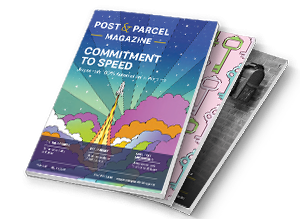
Post & Parcel Magazine


Post & Parcel Magazine is our print publication, released 3 times a year. Packed with original content and thought-provoking features, Post & Parcel Magazine is a must-read for those who want the inside track on the industry.


Pin It on Pinterest