



A better way to sell for smaller businesses
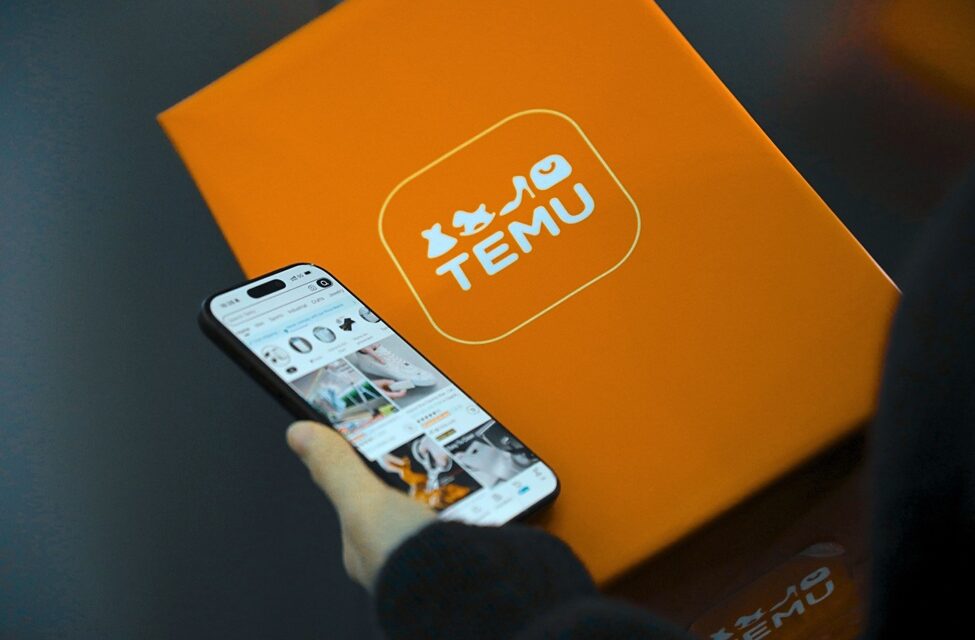
Leonard Klenner, Executive Assistant for Corporate Affairs to the President of Temu, explains how e-commerce platforms and logistics partnerships can help small businesses overcome barriers to cross-border commerce.
“Small and medium-sized enterprises (SMEs) account for roughly 90 % of businesses and about two-thirds of employment across OECD countries, and more than half of the goods and services those economies produce. Yet only around one in five SMEs in the European Union sell online, according to Eurostat. That gap matters more than it might first appear. When most of them stay offline, the benefits of digital commerce flow mainly to companies that already have the resources to manage its complexity.
As a newcomer to the UK and EU markets, Temu set out to understand the factors underpinning the low adoption for online commerce. Three barriers repeatedly came up in our conversations that explain most of the gap: complexity, cost and connection. Untangling these three Cs means rethinking how e-commerce works and simplifying it so more SMEs can start selling online.
The OECD has found that companies trading across borders can face costs up to 50 % higher than businesses selling only domestically, even within the EU single market. Larger companies absorb that through scale; most SMEs cannot, and for some it rules out selling online entirely.
Temu’s approach to addressing those barriers is to lower the cost and complexity of operating e-commerce. There are no fees to join our Local Seller Programme, now live in 39 markets, with sellers assigned a dedicated account manager to help them resolve problems, and most businesses making their first sale within 20 days. Extended producer responsibility registrations, VAT and product certification are handled through the platform rather than negotiated separately in each country. Temu works with more than 60 licensed producer responsibility organisations across the EU so sellers don’t have to register or file in every market they sell into.
Logistics is an integral part of e-commerce, even more so when selling in multiple countries. Platforms today take different approaches: some build proprietary, closed delivery systems that sellers are required to use; others connect sellers into networks that already exist and are owned by local players who know their markets best; many use some combination of the two. Where a platform sits on that spectrum shapes how much control stays with the seller versus the platform — and it shapes who benefits from the volume that platform generates.
Temu’s approach is to work with more than 150 third-party logistics providers across Europe, including 10 national postal operators, rather than requiring sellers to route exclusively through a single proprietary system. Sellers who already have a shipping setup that works can keep using it. They can also get access through Temu to the logistics integrations with Royal Mail’s Click & Drop, La Poste’s Colissimo network, and Austrian Post’s Poststations, to name a few such partnerships. That gives sellers more options, and it drives parcel volume through delivery networks already owned by local operators — rather than diverting it into a system built and controlled by Temu alone.
For operators whose economics depend on fixed infrastructure — sorting centers, delivery routes, regional hubs — additional volume routed through their existing networks adds to the base they already serve, and is one of the factors that supports the case for maintaining and expanding that infrastructure over time. On a popular corridor such as Germany-France, sellers can save 30 to 40 % on logistics through Temu.
In the UK, Temu’s orders move through Royal Mail’s existing Click & Drop infrastructure rather than a parallel system built by Temu. We have expanded the scope of similar partnerships: a three-year cooperation framework with La Poste in France covers home delivery, pickup points and parcel lockers; an agreement with Austria’s postal operator has extended from parcel delivery into fulfilment and regional logistics; DHL Group and Temu signed a memorandum in 2025 spanning air freight, last-mile delivery and fulfilment. Each of these deepens an existing national network rather than replacing it.
An increasing number of SMEs have found success on Temu after joining the platform.
Malagasy Vanilla, a Belgian wholesaler, is an example of a small business that expanded its sales as a result of Temu. For years, the company sold only to wholesale buyers because shipping a retail-size pack could cost as much as the vanilla inside it. Temu’s partnership with Belgian postal operator Bnode changed that math without requiring the company to build its own delivery capability. In the four months after joining Temu, the company’s sales quadrupled.
Recamania, a family-run spare parts business in Spain, had spent months trying to build traction on its own before joining Temu. After a two-week onboarding process and support from a dedicated team got its products live, it now ships around 1,000 orders a day.
AMF Creation, a German fabric manufacturer that had relied on a single marketplace for years, saw its daily orders climb from zero to 100 within days of connecting to a broader customer base on Temu, and has since expanded into France.
Each business had a viable product and overcame the barriers of cost, complexity and lack of connection to succeed.
That bodes well for the roughly four in five small businesses still not selling online.”
About Leonard
Leonard Klenner is the Executive Assistant for Corporate Affairs to the President of Temu and is responsible for EU relations at the company. Before joining Temu in 2023, Leonard worked for international technology companies, most recently at Stripe, the financial technology company. He began his career as a researcher in the United States, after completing his studies at Johns Hopkins School of Advanced International Studies, the University of Oxford, and the Ludwig Maximilian University of Munich.