




DHL Group strengthens logistics for global healthcare
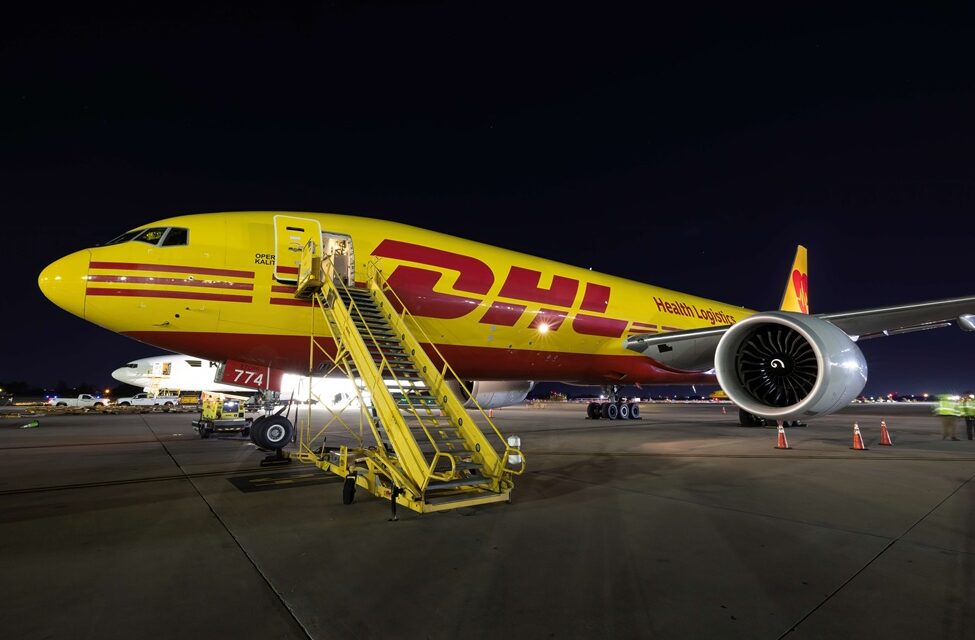
DHL Group has announced another important step in expanding its logistics capabilities in the Life Sciences and Healthcare (LSH) sector. With the expanded cold chain network in air freight, the company creates reliable solutions for the transport of temperature-sensitive drugs, vaccines and other pharmaceutical products, including cell and gene therapies.
As a further core element of the EUR 2 billion strategic investment in DHL Health Logistics, the global network provides end-to-end visibility into the shipment of highly sensitive healthcare products and supports the evolving logistics requirements of the world’s largest healthcare and pharmaceutical companies.
“Life sciences and healthcare companies expect reliable, compliant and fully transparent cold chains – and these expectations continue to rise,” says Oscar de Bok, CEO DHL Global Forwarding, Freight. “At the same time, our customers want to simplify their supply chains and reduce costs. With our expanded network, we will connect DHL Aviation’s global air freight infrastructure with our network of transshipment points that are in line with Good Distribution Practice (GDP) guidelines. In addition, there are our investments in modern, temperature-controlled locations and warehouses. The result is more robust and efficient logistics for customers, who in turn supply patients with vital therapies and therefore have to rely on first-class quality in the supply chains.”
DHL is becoming more independent of third-party providers and commercial airlines by expanding its own network. This increases safety and improves the temperature stability of the shipments throughout the entire transport chain. At the same time, DHL is strengthening the resilience of its supply chains – an important factor in view of geopolitical tensions, scarce capacities and growing regulatory requirements. In addition, the expanded network creates more capacity for temperature-sensitive pharmaceutical and medical shipments and connects key markets via more than 30 GDP-compliant air freight hubs and gateways.
The network will initially connect central DHL hubs such as Brussels (BRU) and Cincinnati (CVG); further routes in Europe, the Middle East, Asia and Latin America are to follow. The connection between Brussels and Cincinnati connects the Midwest of the USA – home to many leading pharmaceutical companies – directly with one of Europe’s most important life sciences regions. The route also bypasses congested coastal areas and enables seamless, temperature-controlled transport of high-value biologics and urgent cell and gene therapies. At Brussels Airport, a 45,000 square metre area in the cargo terminal reserved exclusively for pharmaceutical products supports compliance with all required clinical standards along the entire transport chain. This creates a reliable connection between two of the world’s most important healthcare markets.
For the further expansion of the network, DHL is already looking at the regions of India, Singapore, Japan, South Korea, Brazil, other parts of the USA, Germany and Ireland. On these routes, too, DHL wants to ensure that the strict regulatory requirements are met and that product quality is maintained along the entire supply chain.
The expanded air freight network will help DHL improve healthcare logistics globally and meet the growing demand for fast, reliable and temperature-controlled transportation of pharmaceutical products and medical supplies. The safety of patients is always the focus. Extensive investments and the expansion of the logistics infrastructure at the transfer points reduce the need for expensive and sometimes heavy packaging as well as refrigerated air freight containers. This creates economic added value, ensures quality and reduces the risk of undesirable temperature fluctuations.
To this end, DHL will also use its own Boeing 777 freighter on the Brussels-Cincinnati route in the future. The machine in the new DHL Health Logistics design underlines the company’s strategic focus on the life sciences and healthcare sector. The fixed flight route offers one thing above all: reliable and predictable capacity on one of the most important pharmaceutical transport routes. This allows the high requirements for reliability and stable temperatures for sensitive shipments to be met. With the use of the aircraft and its growing network, the company is strengthening logistics in the healthcare sector.