


Postal Confidence
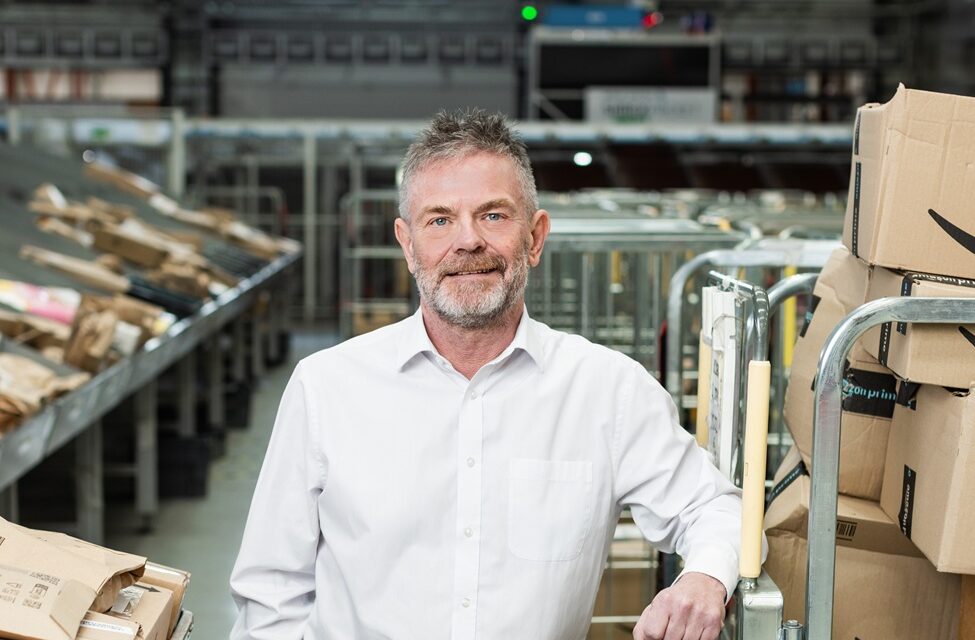
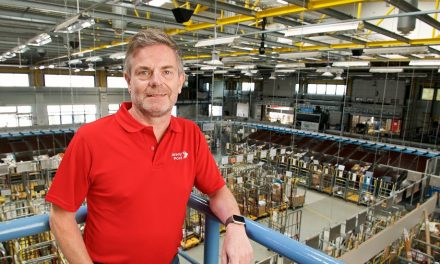
Post & Parcel spoke to CEO of Jersey Post, Mark Siviter about peak resilience, local credibility, and embracing an industrial revolution.
How was peak for Jersey Post?
 Peak was strong for us. We saw double-digit growth in parcels last year. We started planning for it as soon as we got to the beginning of last year. We do a lot of work with clients upstream to make sure we get the forecast right and that we’ve got the right manpower in place. As we are an island, you’ve got to control the flows coming in, and we can experience some weather-related delays with the ferries.
In addition to that we do a huge amount of work keeping customers advised if there are any delays.
We’ve got a really strong brand. And of course, the main message is to send your presents early!
How do you prepare for economic uncertainty in your preparations for peak?
We’re really careful not to just look at what the global economy looks like – whether that’s growth rates being pushed down, border issues, or Trump-related trade issues – and directly plug that into our forecast. We don’t see a linear relationship there whatsoever.
Access to retail and access to products doesn’t go away during peak. A huge amount of the volume that comes through is tied to subscription models (such as Amazon’s Subscribe and Save), so we’re ordering things that still economically make sense for customers.
Why is peak demand so resilient for Jersey Post?
What we’ve found is that we offer a high-value service, we do what we say we’re going to do, consistently, and people notice that. The connection is really to the quality of the service and the availability of products. On the island, we deliver to pretty much everybody. We’ve signed a multi-year contract with Amazon, and we deliver for DPD, UPS, and DHL. If people are switching carriers, the volume still ends up with Jersey Post. And customers recognise the Jersey Post van coming to their door.
I last interviewed you in 2022, when you started at Jersey Post. What are you most proud of delivering so far?
When I arrived, the business was looking to diversify, both vertically and globally. That was off the back of some difficult economic situations – Covid and the war in Ukraine. We had to step back a bit and refocus on the core, and make sure we stabilised the business.
What I think we’re most proud of is that we went through some really difficult times and managed to get to a position where we stabilised the balance sheet, continued to deliver from a service perspective, and shifted the model slightly – one where we owned all of the assets to one where we worked more with partners.
How did that shift in model change the way the business performed internationally?
We probably had our best international year last year, even though we no longer owned some of the businesses we previously had in the US and Australia. We were more profitable, and I think more flexible in the services we provided. A good example of that was when the Trump-related challenges came around-we set up an e-commerce service in the States that was hugely successful.
We kept the core portfolio of businesses, but we moved from owning all the assets to flexing into partner relationships, and we still have strong relationships. One of the businesses we bought was later sold back to the original owner, who’s still our agent in the US. It works much better, because they understand what’s happening on the ground.
Financially, the business was in a difficult place, and it’s now much more secure. We’re making money, we’re cash-positive, and we have the Government as our sole shareholder, which gives confidence.
We’ve also won a number of contracts. When I arrived, we weren’t delivering for UPS or DPD. Now we have those contracts. For Amazon to sign a multi-year contract is great news.
We received an email from Amazon on Christmas Eve. It said we had done an amazing job. That was a real endorsement and meant a lot to have them recognise the work we’re doing.
How has the balance between traditional postal services and international services changed over the last few years?
 I’ve been in the mail business for quite a long time, and if I look back, people have talked a lot about declining letter mail and an increase in e-commerce volume. In a way, postal networks were quite well positioned to deal with that initially, but they’ve needed to change quite quickly because other carriers have come in and put their own footprints in place.
Mail isn’t dead yet. We’ve still got a lot of letters. The value of post – and the connection between postal workers and communities is still really important. Trust is critical. The brand is really, really important.
If you look at Royal Mail, for example, they lost a lot of market share and now they’re increasing market share again, internationally and domestically. Mail companies still have a big role to play. They’re still living in most people’s lives, they’re a trusted brand, and they’re regulated.
There are some horror stories out there with other brands getting a really bad time. Whether that’s fair or not, I don’t know, but I think the public still has a soft spot for mail businesses. Even when things go wrong, they tend to give us a bit more opportunity to fix it.
There’s also a lot going on cross-border, particularly in Europe. There are initiatives around international exchange, and I think postal services will still be able to maintain volume. These are still some of the most economic networks because of the massive volumes they carry. It’s about making sure they don’t get lost in the commercial world.
You’ve spoken before about the social side of post. Is that still something you see today?
Yes, absolutely. During COVID, Jersey Post did a service where posties were checking in on neighbours, “Call and Check”. This service is now looked after by a different company.
However if you’ve got a postie in the community, they know what’s going on. Not that long ago, I came in and there was a letter from someone saying their elderly relative had fallen in the back garden. The postie had organised an ambulance, sat with her, and made sure she was safe. She was incredibly grateful.
Another example of this – one of the posties found a customer who’d fallen behind the front door. He managed to get the keys through the door, gain access, lift her up, and get help. He knew where the daughter lived and went and knocked on her door.
That local knowledge is important stuff. It happens naturally because posties know their rounds and their communities.
And that’s not something you can replicate easily?
No you can’t bottle it up or put it in a marketing campaign. We just encourage people to do the right thing.
When I go out on the round, some posties don’t want me to come with them because they say, “Oh, you’ll see I do things a bit differently.” What they mean is they’re not just dropping mail at the fastest point – they might have a cup of tea with someone, put mail around the back, or do whatever’s right.
That’s important to us, and we’re never going to lose that. This business will continue to do well. That kind of connection matters.
What matters most to staff working on the ground?
The right tools for the job. We spend time going down and talking to people, acknowledging how hard the work is – especially when there are delays and huge parcel volumes. Help out, listen, and make sure they’ve got what they need.
And don’t hide behind management language. Talking about transformation programmes doesn’t mean anything to people. Keep it simple, keep it real, and when things go wrong, don’t step away from it – take it on the chin.
Sustainability is clearly important to you. What’s next?
 We’ve done a good job reducing our own emissions, particularly through electric vehicles. The next step is reporting emissions from third-party partners and working together to reduce them.
In Jersey, all our electricity comes from France and nuclear power, so we need to be careful about rushing into our own power generation without thinking it through. Scale matters, and we may be better working with Jersey Electricity rather than going it alone.
Are there any acquisitions in the pipeline?
No. We’ve secured the balance sheet, but the acquisitions stretched the business financially and left us a bit behind on infrastructure.
Our focus is now on investing in the mechanics of the business – upgrading sorting machines, contracts, and reporting carbon emissions in real time per parcel rather than relying on algorithms. We’re starting an investment programme and focusing on digital infrastructure.
We’ve got our UK business – jpgl – our customs programme, and our international e-commerce business. Rather than acquiring, we’ll invest in infrastructure and technology, including AI.
What are your thoughts on AI?
 I genuinely think this is the most exciting time on the planet at the minute. It feels like the Industrial Revolution. Our industry can be slow on the uptake with some of this, so it’s about leading from the front, retraining, and getting up to date on what AI can actually do for us, particularly in terms of efficiency benefits. We also need to make sure we’re creating interesting jobs for people. The human touch and creative minds matter. Quite frankly, a lot of classical learning is going to be taken over by robots and machines – and we shouldn’t be scared of that.
In our industry, this brings massive opportunities. We won’t be acquiring, but we will be spending money on technology. We’ll be looking at leading-edge tools so we can understand what’s going on in a real-time environment. That’s really my focus.
I’m doing a six-week course on AI and a four-week course on environmental studies. We need to think about investing in the infrastructure – the “tin and the mechanics” – upgrading systems and moving towards more machine-led decision-making. That includes contracts, data, and reporting.
So our focus will be on tools – not just locally, but in the UK as well.
How are you using AI at the moment?
At the moment, we’re using some of the classic tools to take away the more repetitive jobs -things like job descriptions and back-office work.
Where we need to deploy it more is in delivery. I want to understand each route on a daily basis -volumes, revenue, vehicle data, and what we can learn from telematics to reroute things better. Jersey is small enough that we can get on with this without years of projects.
Do you have any messages for other postal CEOs?
Be collaborative. It can be difficult because you’re competing, but postal services have worked together globally for decades. Also, be careful about the race to the bottom. Love the postal workers. Don’t see cost as a negative -see it as an opportunity. And make sure commercial organisations keep bringing new business into the network and continue to innovate.
About Mark
Mark Siviter has been the CEO of Jersey Post Group since 2022. Mark is an accomplished senior executive with a proven track record of delivering major change, significant growth and turnaround solutions within large and complex businesses in global postal and logistics industries. Previous roles include CEO of DHL Global Mail UK, Managing Director of DHL Global Mail Europe and Managing Director, Mail and Retail, at the UK Post Office. Mark holds an MBA from Ashridge Business School and a Chartered Directors accreditation from the Institute of Directors UK. In January 2026, he was appointed Vice Chair to the PostEurop board.